Save money on train tickets with the Avanti West Coast Summer Sale 🚄



Regeneration
National Museums Liverpool begin conservation work on two historical boats
8 months ago
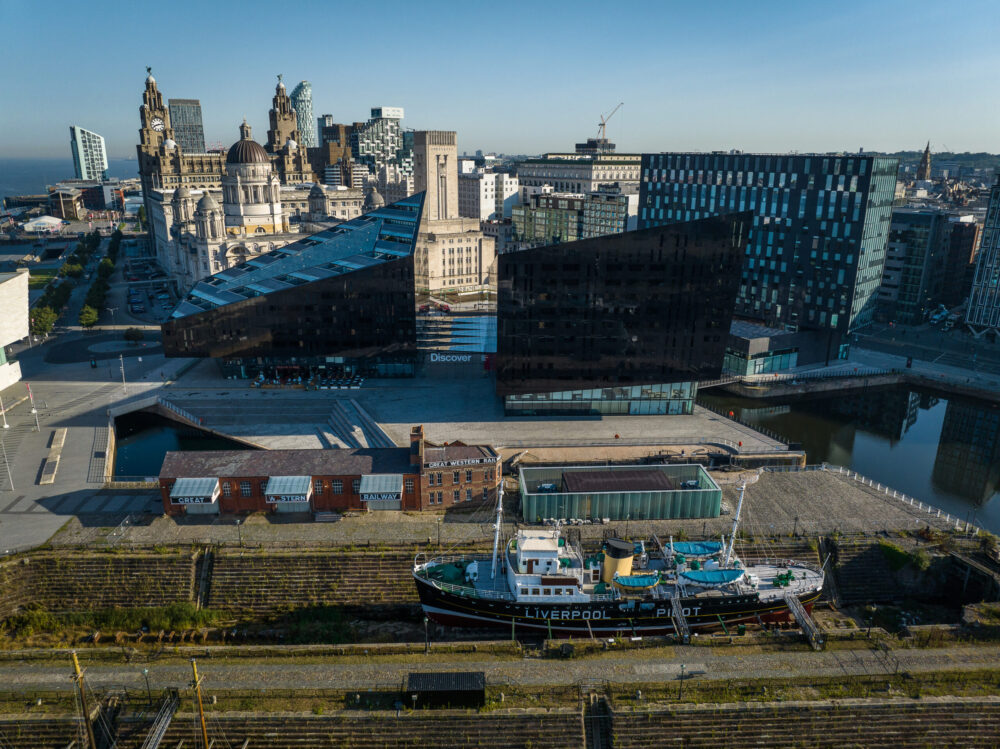
National Museums Liverpool is overseeing the conservation of two familiar sights on Liverpool’s historic waterfront, as the tugboat, Brocklebank, and pilot boat, Edmund Gardner, undergo specialist works to protect the future of both vessels.
Brocklebank, owned by National Museums Liverpool and chartered on long term agreement by the Brocklebank Preservation Society, was launched in 1964 and mainly used for ship handling at Liverpool, with occasional duties at Heysham, Larne and Barrow.
Now the 61-year-old tug is berthed at Cammell Laird for a period of essential repair works. Following a recent inspection which revealed serious corrosion across the steel hull of the vessel – conditions to be expected on an operational boat – this conservation work has become crucial to ensure its longevity.
The work, which comprises a high pressure clean before applying a repair coating to fill all the pitting affecting the ship, is expected to extend Brocklebank’s seaworthiness for another decade.
🚄
Heading to London this summer?
Save money with the Avanti West Coast Summer Sale. Book now and snap up the best fares before they're gone.
Book now and save →Brocklebank’s crew are looking forward to the ship returning to Liverpool’s docks and waterfront visitors by January 2026.
The pilot boat, Edmund Gardner, which resides in Canning’s north dry dock, is National Museums Liverpool’s largest object.
As an operational vessel, its role was to act as a base in the Irish Sea for the Pilotage Service guiding the steady stream of ships entering and leaving the Mersey during 1950-80s.
In 1982, Edmund Gardner entered Maritime Museum’s collection, as an excellent example of a British boat, built in a traditional style and witness to the changing fortunes of Liverpool’s docks. Having been bought straight from service, the vessel, which is one of only two large pilot boats preserved worldwide (the other is in Australia), contains many of the original features, including the control and navigation equipment on the bridge.
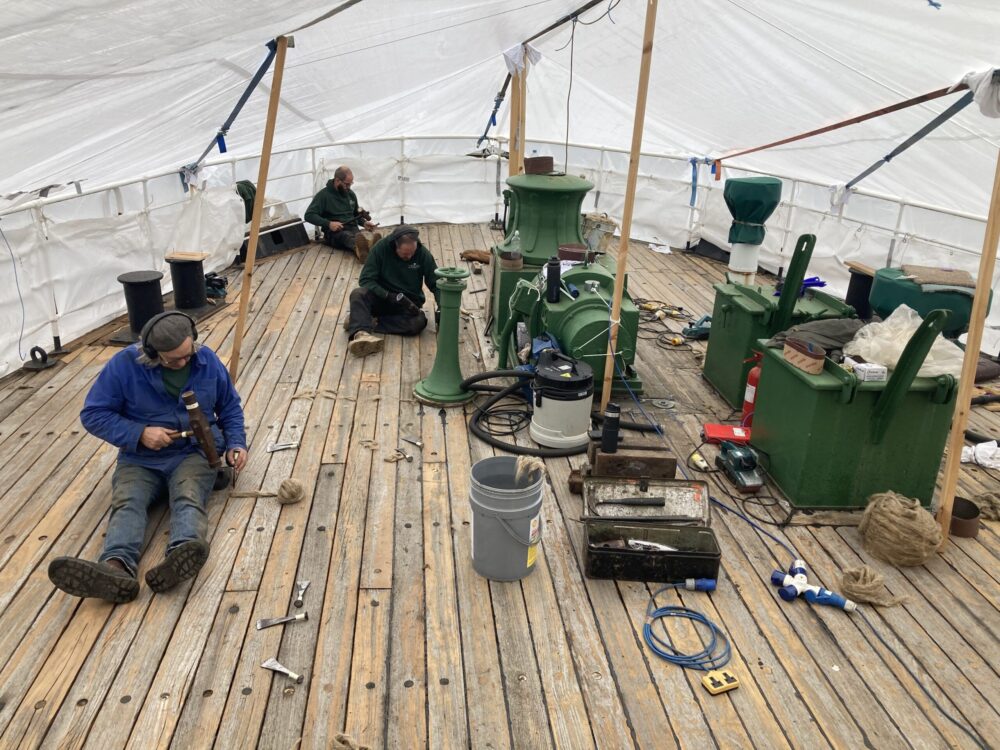
Edmund Gardner has recently undergone specialist treatment of its wooden deck and caulking, as the first line of defence against water ingress into the vessel’s interior and key to its long-term preservation.
The 72-year-old Burmese Teak decks have survived remarkably well, with only small areas of decay in need of graving, but the deck caulking had become severely degraded and required complete replacement. Aiming to use traditional materials and methods, National Museums Liverpool’s Shipkeeping and Engineering Conservation team partnered with shipwrights, T. Nielsen & Company, Gloucester.
Jonathan Carr, Lead Conservator, Shipkeeping, said:
“Traditional deck caulking using spun oakum and marine glue is a dying art, so having the funds to engage the crew from T. Nielsen’s was exactly the specialist care Edmund Gardner deserves. Not only did we manage to get more than 1200m of deck seams caulked, we also had more than 120 graving pieces fitted to decayed or damaged deck planking.
“We are working to secure more funding in 2026 to continue the caulking programme and to complete other long-standing conservation priorities that will secure the future of this historic boat.”
Edmund Gardner is part of the National Historic Fleet – ships of national importance –, so this work is not just of local significance but also forms part of a UK-wide initiative to list and protect noteworthy vessels.
Ian Murphy, Head of Maritime Museum, said:
“Visitors to Liverpool’s waterfront may already be missing Brocklebank and its enthusiastic crew who all volunteer their time and knowledge so generously. Brocklebank’s open days and public events are always popular, and demonstrate the interest in Liverpool’s maritime heritage, and why it is so important that this preservation work, required to ensure the boat’s future, is a priority for National Museums Liverpool.
“It is also great to see the work on Edmund Gardner, employing traditional skills and materials to ensure the ship has an exciting future as part of the transformation around Canning Quayside and Dry Docks.”
The £200,000 conservation project across both ships is supported by the Public Bodies Infrastructure Fund (PBIF), a government capital investment programme for the essential maintenance of museum estates.
Maritime Museum and International Slavery Museum are now closed for major redevelopment works, as part of National Museums Liverpool’s Waterfront Transformation Project.
Find all the latest Liverpool news here.
Find out what’s good up North on our new platform, The Northern Guide.
From the best hotels, beauty spots, days out, food and more up North – visit thenorthernguide.com and follow The Northern Guide on Instagram HERE.

The Guide Liverpool Editorial Team
The Guide Liverpool proudly shares regular stories from in and around Liverpool. From the latest news, to the best what’s on listings. Our editorial team is made up of trained journalists and media professionals, meaning you will never miss a moment from the city region.

 Subscribe
 Follow Us
 Follow Us
 Follow Us
 Follow Us