Save money on train tickets with the Avanti West Coast Summer Sale 🚄



Features
7 amazing things to see in National Museums Liverpool’s anniversary exhibition
3 months ago
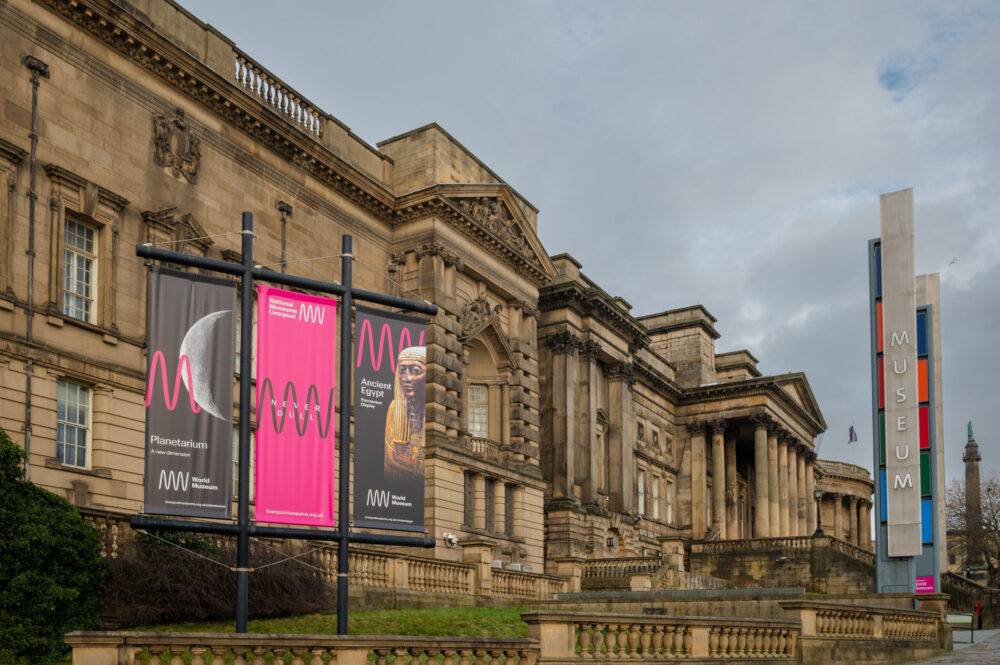
It’s 40 years since National Museums Liverpool was launched, and to celebrate it’s created an amazing exhibition with display items from each of its seven venues.
Founded in 1986, the formation of National Museums Liverpool marked a historic moment in the city’s history, bringing together its portfolio of internationally applauded Merseyside museums and galleries: Lady Lever Art Gallery, International Slavery Museum, Maritime Museum, Museum of Liverpool, Sudley House, Walker Art Gallery and World Museum.
Now, for the first time ever, it’s brought together incredible pieces from each of the venues under one roof in the must-see National Museums Liverpool at 40 Exhibition which is on at World Museum.
Joe Brook, executive director of audiences and media, says:
“Our National Museums Liverpool at 40 exhibition celebrates the unique character of each venue that we look after. The vast and varied collections that live here in Liverpool are important not just for us but for the city, ranging from masterpieces, local relics and seemingly unassuming objects with an important story to tell.
🚄
Heading to London this summer?
Save money with the Avanti West Coast Summer Sale. Book now and snap up the best fares before they're gone.
Book now and save →“We hope visitors have fun exploring some of the treasures we have on display.”
Here are just some of the highlights marking a city milestone …
Telegram from Carpathia captain to Cunard, Liverpool
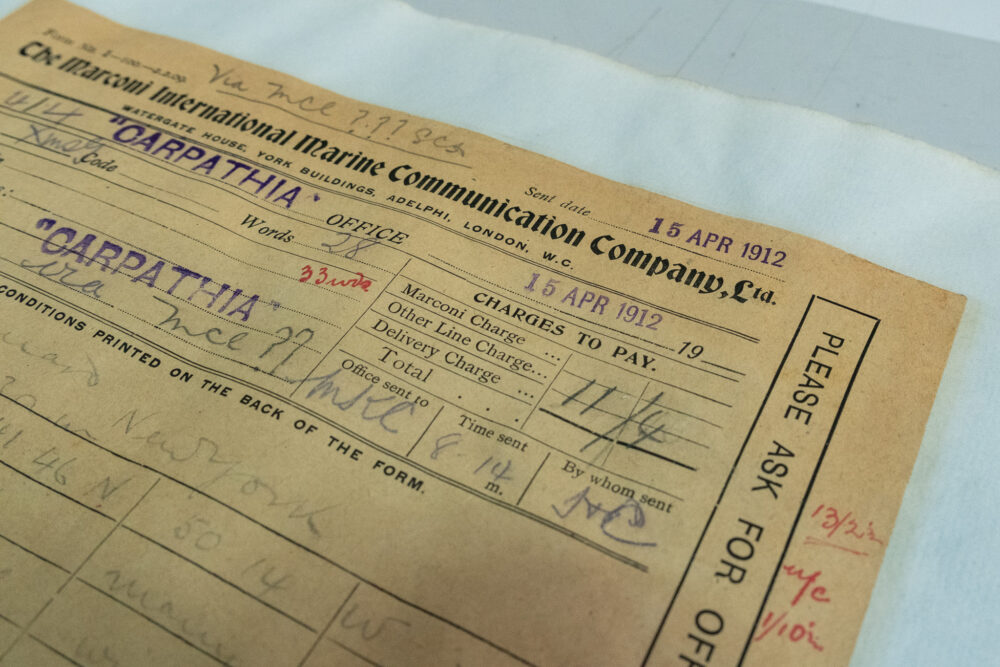
A telegram from the Carpathia, the Cunard vessel that rescued the survivors of the Titanic, provides evidence of the aftermath of the rescue and the important part played by Marconi’s electronic telegraphy system.
Sarah Starkey, lead archivist of Maritime & Slavery Collections who chose this, says it’s one of many telegrams sent by the radio officer of Carpathia during their rescue attempts, adding:
“This little bit of paper would not have survived if it hadn’t been part of such a famous event. I hope it leads to an appreciation of the human ingenuity that produced morse code and harnessed radio waves, and how faster communication revolutionised the world.”
Cream jacket
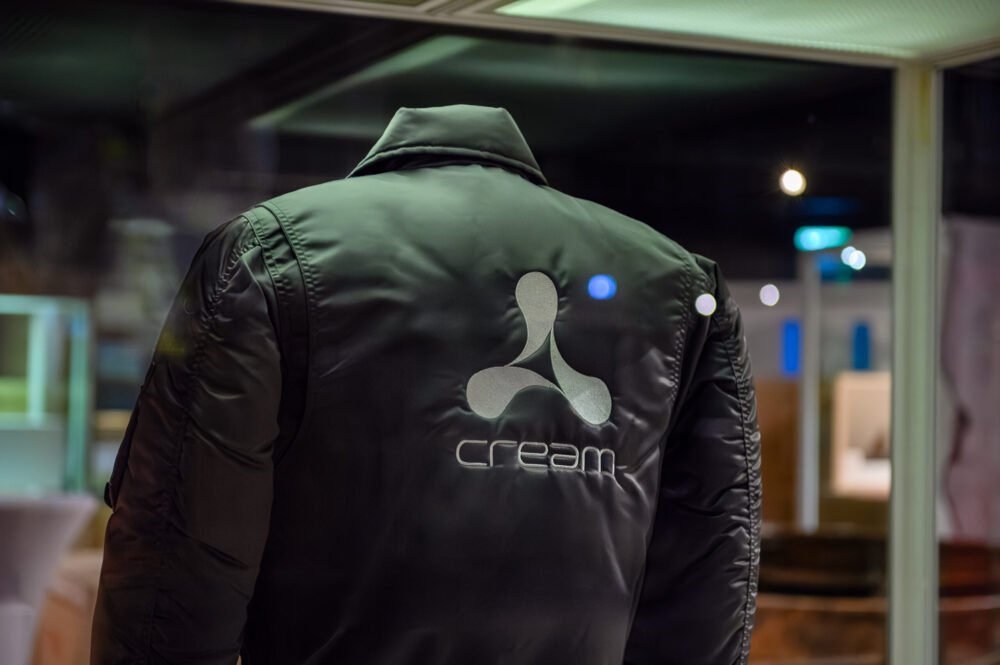
Cream was the now-legendary dance club night hosted weekly at Nation nightclub in Wolstenholme Square, Liverpool, between 1992 and 2002. Created by music promoters Darren Hughes, James Barton and Andy Carroll, it grew into one of the super clubs of the 1990s, hosting some of the world’s biggest DJs and developing a global legacy that continues today.
Pauline Rushton, head of Lady Lever Art Gallery & Sudley House, says:
“I chose the jacket for the exhibition because Cream is still seen as an iconic club, not just locally but worldwide.” Gifted by staff in the Cream merch shop in Slater Street in 1999, Pauline adds: “For me, this jacket signifies a whole lifestyle – live for the weekend and party hard!”
Hillsborough Justice Door
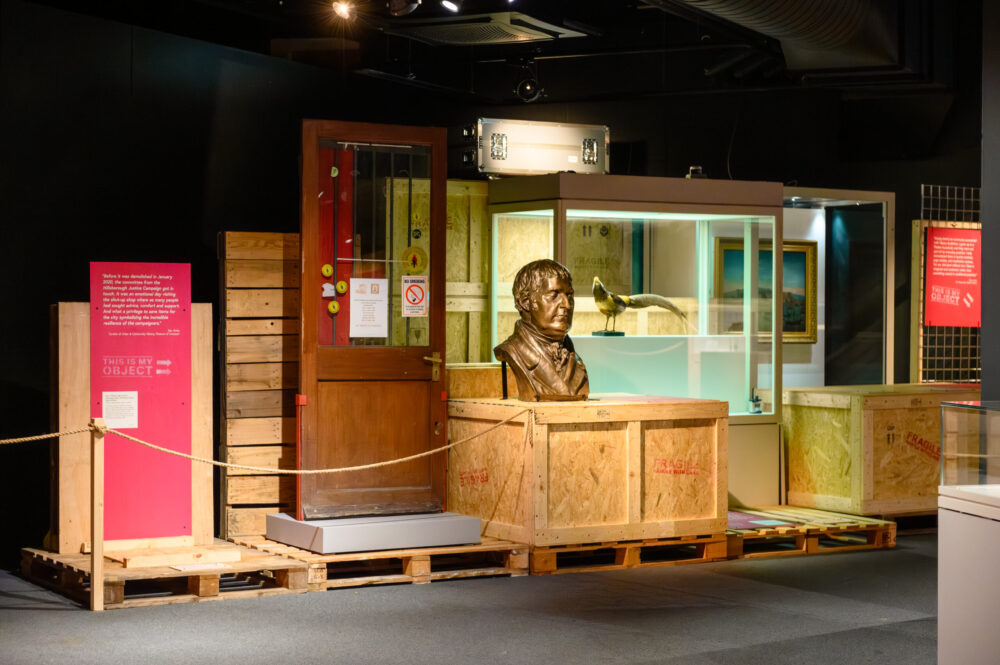
Thousands of people walked through this door into the iconic Hillsborough Justice Campaign Shop opposite Anfield Stadium at 178 Walton Breck Road, and the shop became an essential fixture of the campaign for families seeking justice for the deaths of the 97 fans at Hillsborough in 1989.
Kay Jones, lead curator of Urban & Community History at Museum of Liverpool said:
“Before it was demolished in January 2020, the committee got in touch. It was an emotional day visiting the shut-up shop where so many people had sought advice, comfort and support.”
But she adds: “What an absolute privilege to save items for the city symbolising the incredible resilience of the campaigners. I chose the door (because it) represents the extraordinary spirit and determination of our city to always strive for the truth against unimaginable odds and a reminder that ordinary people can challenge those in power and win.”
Dixie Dean’s Shield
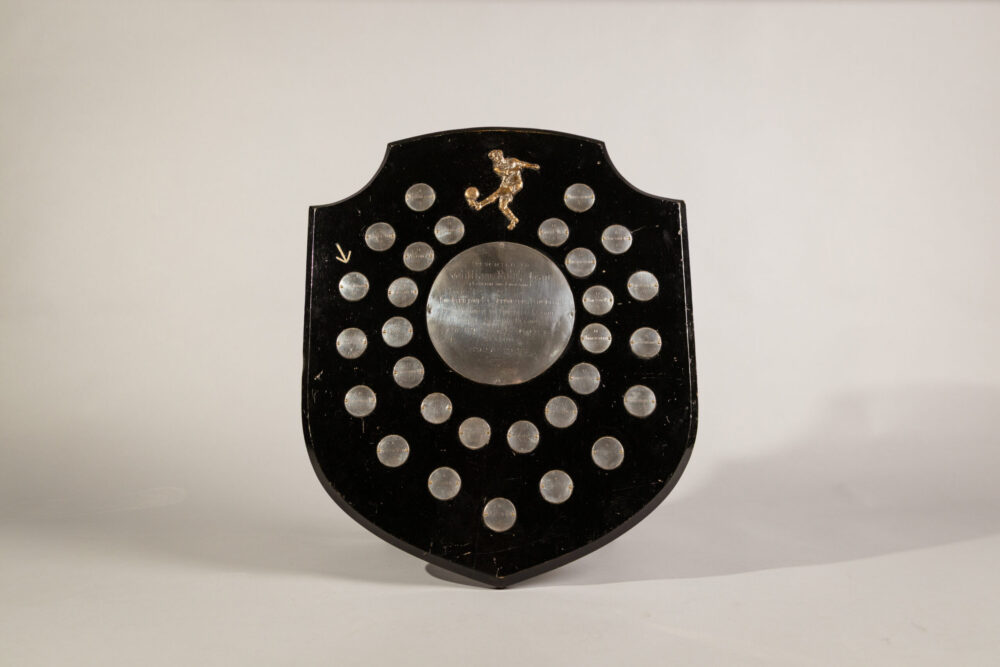
The shield was presented to legendary Everton FC striker William Ralph ‘Dixie’ Dean (1907 – 1980) by the Everton FC Supporters Federation Club to commemorate his English Football League goal scoring record of 60 league goals in the 1927-1928 season.
Jeff Speakman, Curator of Archaeology at Museum of Liverpool, says:
“As a life-long Everton fan, I chose this shield because Dixie is probably right (asked if his record would ever be beaten, he replied ‘yes…(by) the fellow that walks on water’). Modern-day football has changed substantially, but it is unlikely that the record will ever be beaten and will always be held in Merseyside.”
Pyramidion
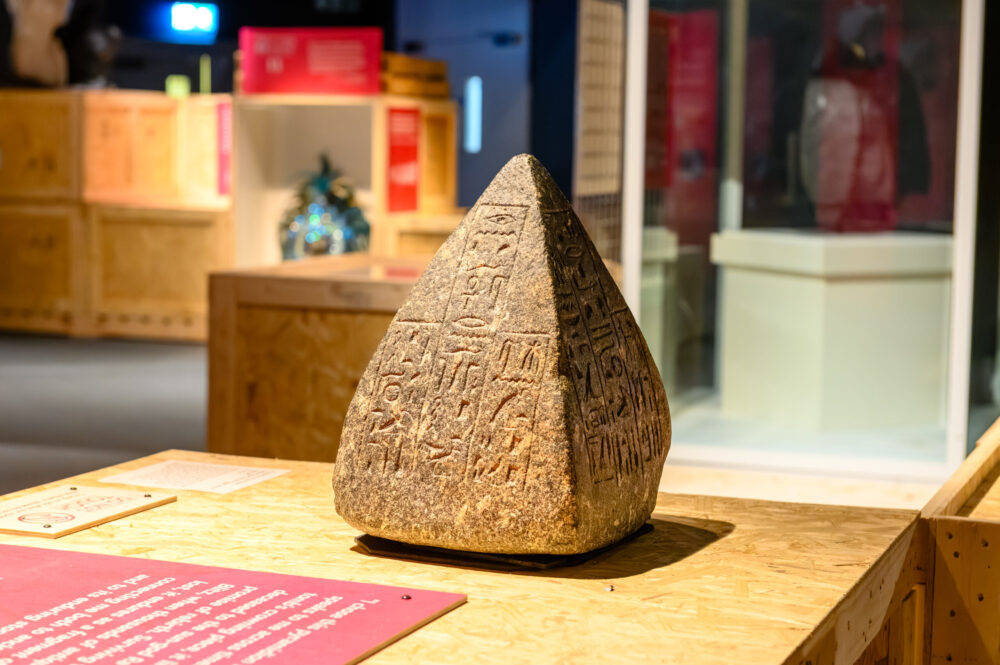
A pyramidion is the capstone that once sat on the very top of an ancient Egyptian pyramid or small tomb pyramid. The one in the exhibition comes from a small pyramid that was built over the tomb of Neferronpet who served as vizier and High Priest of Ptah from the reign of Ramesses II through the reign of Sety II.
Head of World Museum Ashley Cooke chose this piece because, she says, it speaks to her across time: “Once a tomb’s crowning piece, it linked the deceased to the sun-god Ra and the promise of rebirth. Surviving the 1941 Blitz, when thousands of antiquities were lost, it endures as a fragment of history, connecting me both to ancient Egypt and to its enduring legacy.”
Albert Einstein’s landing card
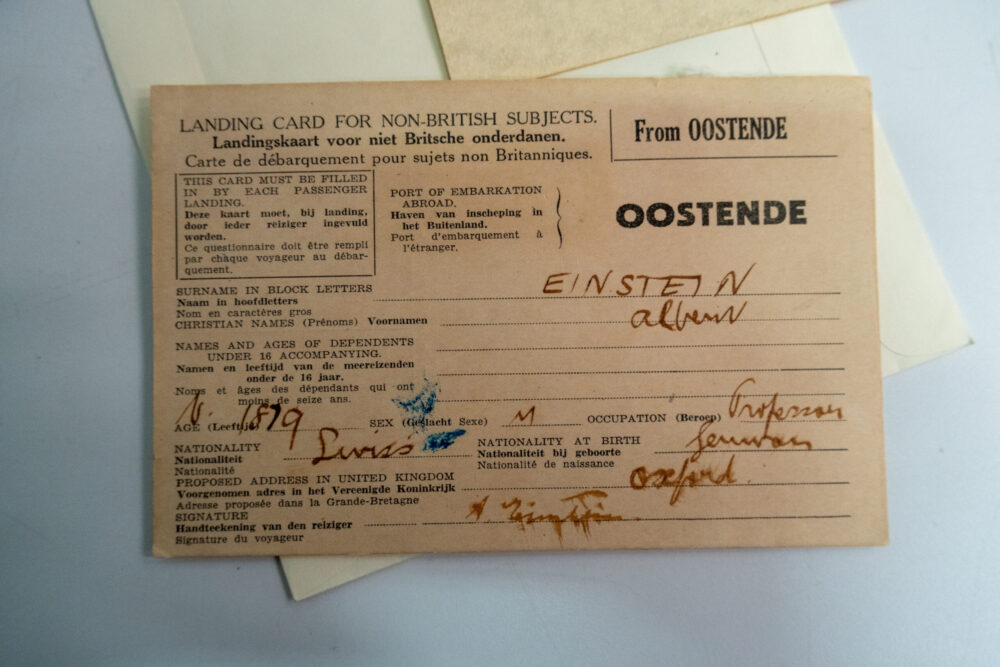
His name is synonymous with genius, theoretical physics and the Nobel Prize, but how many people realise that Einstein was also a refugee? This landing card captures a significant moment in Einstein’s life, when he arrived at Dover in 1933, temporarily seeking refuge in the UK from Nazi persecution.
Alayna Ellis, curator of Border Collections at Maritime Museum said:
“To me, this small piece of paper carries many meanings, but above all, represents Albert Einstein as a symbol of compassion”
The Peters Painting
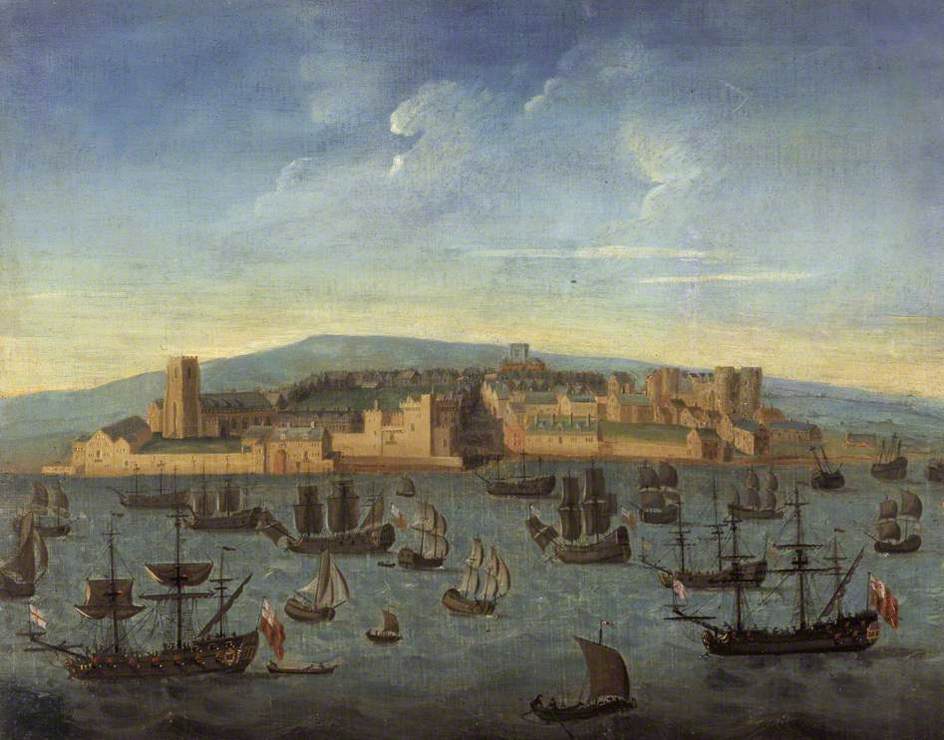
The ‘Liverpool in 1680’ painting is one of the highlights of National Museums Liverpool’s collection, being the earliest depiction of the city in a painting. It was presented to the Town Council in 1818 by Ralph Peters III, the son of a town clerk, and is affectionately known as the ‘Peters painting’. In it you can see St. Nicholas’ chapel which became the parish church in 1699, and Liverpool Castle which was demolished in 1726.
Rebecca Smith, Curator of Maritime Art at Maritime Museum, says:
“I particularly like the lively River Mersey looking very active with different boats and we can just about see people on board.”


 Subscribe
 Follow Us
 Follow Us
 Follow Us
 Follow Us
 Follow Us