Live updates from Ladies Day at Aintree Racecourse!



Features
New campaign aims to save Liverpool’s visitor economy
3 months ago
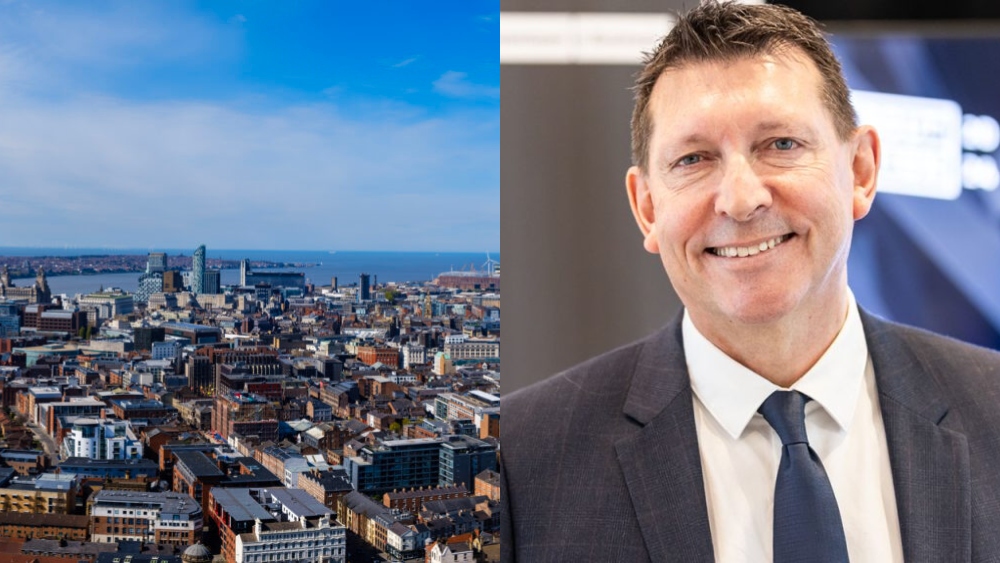
Liverpool could be on the cusp of a fantastic future – or heading into a really dark place.
That’s the stark warning from Frank McKenna, group chair and chief executive of Downtown in Business, which has joined forces with Liverpool Business Improvement District to launch a national campaign to tackle the increasing pressures on the UK’s visitor economy.
The hospitality, retail and leisure businesses which create its backbone – and are the ‘anchor industries in the city’ – are coming under increasing difficulty with many fighting a constant battle for survival.
Unlocking Britain’s Visitor Economy will aim to connect business leaders, BIDs, hotels, retailers, cultural venues and MPs, and take their concerns to those in power, urging the Government for a pro-growth, business-led approach to supporting it.
At the centre of the campaign is a new Visitor Economy Growth Charter and a Visitor Economy Manifesto with specific policy requests set to be announced in June.
Included will be clarity on the national tourist tax, reform of business rates and VAT, action on high street regeneration, looking again at tax-free international shopping, skills and staffing reform, modernised planning and licensing, improved night-time transport, and changes to Package Travel Regulations.
So why now – and why the partnership with Liverpool BID?
Frank said:
“Downtown in Business has a national reach and we do a lot of work in Westminster and so we deal with hospitality companies right across the country, particularly in the core cities of Birmingham, Manchester, Leeds, Newcastle and, of course, Liverpool, so we’re well aware of the challenges the industry faces,”
“Liverpool is heavily reliant on its visitor economy and so the Liverpool BID Company, which is quite unique in having an Accommodation Business Improvement District, seemed like the obvious partner to take this campaign forward.”
The answer to why now is that the sector, adds Frank, is facing a ‘perfect storm’.
“Post pandemic, hospitality has been challenged. But over the last 18 months it’s faced a number of policy initiatives from the Government that have put it under even further pressure; the National Minimum Wage, particularly because the hospitality industry attracts a lot of young people into its employ and so it felt that quite keenly; the National Insurance increase which has impacted on all businesses, and on top of that we’ve had this rates review which inevitably has led to an awful lot of establishments saying this increase is not sustainable if they are to have a viable business.
“All these things coming together created a situation where we felt we had no option than to treat the sector as a special needs case.”
He says the problems need to be addressed urgently, not least because issues are often led by what’s happening in London – ‘which is a very different marketplace’ – and with policy decisions that will suit the capital rather than the northern city regions.
Frank and Bill Addy, CE of Liverpool BID Company, have already written to chancellor Rachel Reeves calling for an urgent review on rates.
A series of regional and national events, a London forum, and a parliamentary reception in Liverpool on June 10 – when the manifesto will be revealed – will drive the overall message.
“The sector’s been treated as a bit of a Cinderella industry but increasingly, if you look at the amount of money it generates, you can see how important it is, especially in cities like Liverpool. It needs to be seen as part of an industrial strategy rather than just an add-on to the economic growth plan.
“We deal with 150+ hospitality businesses and it’s about implementing policies that will have a positive impact on everybody.
“But the important reason about partnering with Liverpool BID is that when we went into lockdown and started to look at the rateable tax take from Liverpool then, almost 60% – if not more – of business rates came from the hospitality sector.
“That’s unusually high. The visitor economy is the anchor industry for the city.
“If we see that decline, in bars, in restaurants, in pubs, and all those indirectly affected, it’s huge.
“If we see a demise at the same time we’re not seeing a growth in professional services, and we’re not seeing a growth in the corporate sector; when we are seeing unemployment rising, and a depression of wages, it could take us back to a very dark place.
“Liverpool could be on the cusp of one of two things: either a fantastic time on the back of some of the initiatives the city council and the combined authority in partnership with the private sector have taken, or a really difficult and challenging time, as the sector that is the foundation of the city’s strength begins to struggle and decline.
“We have got to do everything we can to make sure the latter doesn’t happen.”
Find out more on the Liverpool BID website.
Find more business news across Liverpool on our website.
Find out what’s good up North on our new platform, The Northern Guide.
From the best hotels, beauty spots, days out, food and more up North – visit thenorthernguide.com and follow The Northern Guide on Instagram HERE.

The Guide Liverpool Editorial Team
The Guide Liverpool proudly shares regular stories from in and around Liverpool. From the latest news, to the best what’s on listings. Our editorial team is made up of trained journalists and media professionals, meaning you will never miss a moment from the city region.






 Subscribe
 Follow Us
 Follow Us
 Follow Us
 Follow Us