Visit our new platform The Northern Guide




Community
The remarkable history and community dedication behind Birkenhead’s last surviving theatre
3 months ago
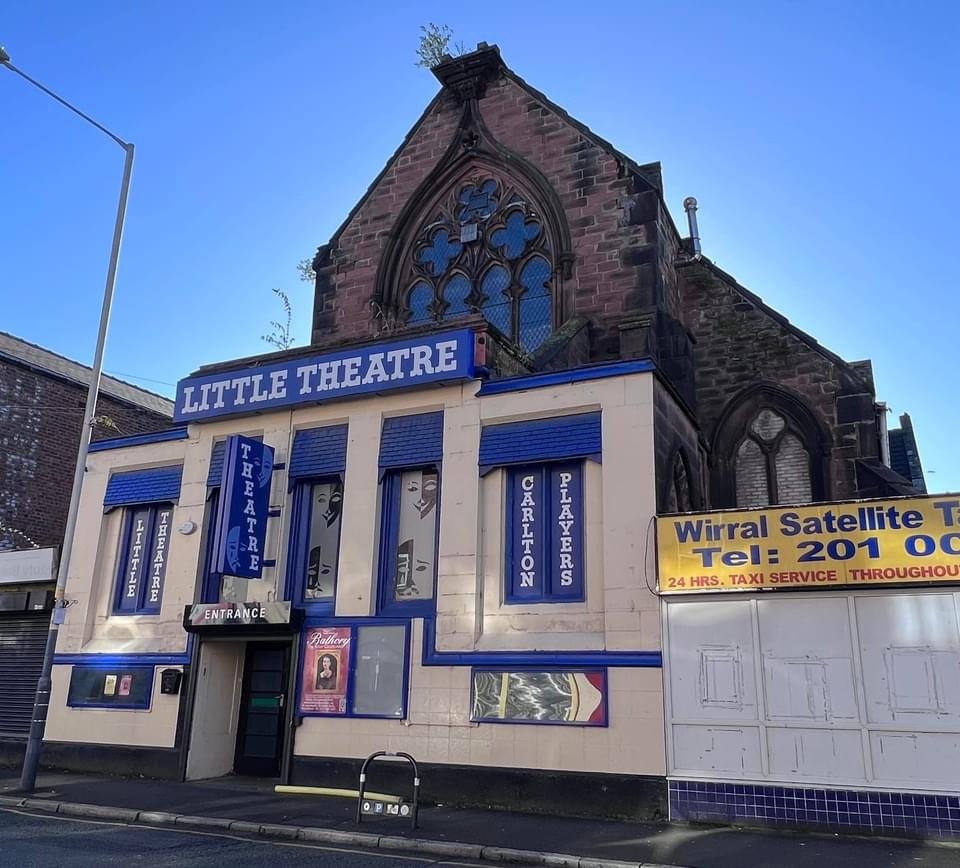
It’s the last surviving theatre in Birkenhead and one of the oldest in Wirral, but despite its remarkable history, The Little Theatre on Grange Road West often remains a hidden gem.
Treasurer Lorraine Langerhuizen said: “We get so many people who come in and say they’ve never been before, so that’s our challenge for 2026: to let more people know about us and get them involved.”
Housed in a former church with its stage where the altar once was, The Little Theatre is home to The Carlton Players. They took on the building in the late 1940s and, after a concerted fundraising effort by the local community, opened it as a theatre in the early 1950s.

Run by a group of dedicated volunteers, it’s now a registered charity trust, producing four full shows plus a panto every year as well as hosting other companies and artists, and smaller shows in its basement bar space.
Like many smaller venues across the country, Birkenhead’s Little Theatre doesn’t receive any official funding so, as Lorraine explains, it manages to continue running thanks to members, audiences and local businesses.
She adds: “We’re reliant on people’s kindness and very grateful for their support, the theatre is important to so many people and we feel we owe it to the memory of the founder members to keep The Carlton Players and The Little Theatre going.”
It’s a creative legacy for the town which began almost a century ago when teenagers Edna Holgate and Ruby Copeland, with help from their families and friends, began The Carlton Players.

Named after Carlton Road in Birkenhead where Edna lived, the company put on its first show in 1930, making a profit of £5.
During World War II, they would rehearse in air raid shelters before holding Saturday afternoon shows in line with wartime blackout restrictions.
Performing for members of the public and the Armed Forces, they did 25 shows during the war and raised £5,000 for war charities; a huge amount at that time.
Post-war, The Carlton Players were offered the chance to buy the 100-year-old church on Grange Road West for £6,000. They raised the deposit needed by establishing The Birkenhead Repertory Theatre Ltd and selling shares for £1 each.
To raise the money to convert the main building into an auditorium, they created a mini theatre in the basement, which is now the bar area. With a tiny stage measuring just 18ft x 10ft, they presented their first show down there in 1951, described as the most intimate production of a Shakespeare play ever!
With the added boost of an interest-free loan from the town council of £14,000 and members giving up their time and labour to make it happen, the main theatre finally opened in 1958.


Since then, The Little Theatre has continued to be at the heart of Birkenhead, providing opportunities for generations to have live theatre on their doorstep.
The building has been adapted to be fully accessible, and Lorraine says they’re proud of the diversity of membership, with ages ranging from 16 upwards.
President Eliane Davie, who joined back in 1968, is still a very active member and Lorraine herself has been involved for over a decade.
Lorraine said: “I walked in there about 15 years ago, because my kids were doing musical youth theatre and I didn’t want them to give up acting, and I never left.
“My son is married to someone he met at the theatre, my daughter met her partner here and they’re not only ones, there have been a lot of relationships started on our stage.”
She admits; “Keeping the Little Theatre alive can be a struggle, not least because of the age of the building and rising running costs.”
“But the Little Theatre is a big part of Birkenhead and it matters because of its history, because people need somewhere to go and because we have a lot of neurodiversity and we provide a safe space for people who might not feel safe somewhere else.”
To support The Little Theatre go to their website.
The new Woodside Ferry Terminal landing stages has arrived on the waterfront.
Find out what’s good up North on our new platform, The Northern Guide.






 Subscribe
 Follow Us
 Follow Us
 Follow Us
 Follow Us
 Follow Us