Save money on train tickets with the Avanti West Coast Summer Sale 🚄




Southport
Southport families’ lawyer calls for individuals to lose jobs after failures
3 months ago

Individuals need to face disciplinary action and lose their jobs after failures which led to the Southport attack, the lawyer for the victims’ families has said.
A public inquiry found the Southport murders of Alice da Silva Aguiar, nine, Bebe King, six, and Elsie Dot Stancombe, seven, “could and should have been prevented”, if agencies had taken steps to stop Axel Rudakubana, who was 17 when he launched the attack on the dance class in July 2024.
In a report published on Monday, inquiry chairman Sir Adrian Fulford said there was a “fundamental failure” by any organisation, or multi-agency arrangement, to take ownership of the risk Rudakubana posed in the years leading up to his attack.
Chris Walker, from law firm Bond Turner, which represents the families of the three girls, said he had written to the Government’s anti-terror programme Prevent, Lancashire County Council social services, Lancashire Constabulary, Child and Adolescent Mental Health Services (CAMHS) and Forensic Child and Adolescent Mental Health Services (FCAMHS) to express “horror” at their conduct.
🚄
Heading to London this summer?
Save money with the Avanti West Coast Summer Sale. Book now and snap up the best fares before they're gone.
Book now and save →
He said:
“We call for disciplinary proceedings to ensue against those individuals, who I know the names of.
“We want disciplinary proceedings against them to begin and to finish swiftly and that includes people losing their jobs.
“If we are not satisfied with the outcome of those disciplinary proceedings from a managerial level to a lower, coalface, level, to use that expression, then I will be publicly naming those individuals as people we say are not fit to serve in a public office.”
He said the families of the three girls remained traumatised, extremely angry and felt as though they were “in a horror movie”.
He added:
“We’ve had so many apologies, we’ve had so many statements that lessons will be learned.
“All of those statements, all those ‘lessons will be learned’, will never bring those children back, those families will have to live with that empty hole for the rest of their lives.”
Mr Walker said he did not believe Prevent, to which Rudakubana was referred three times, was fit for purpose.
He referred to the case of a 17-year-old from Merseyside who had been referred to Prevent twice, before he called police in August last year and told the operator he wanted to re-enact a Southport attack.
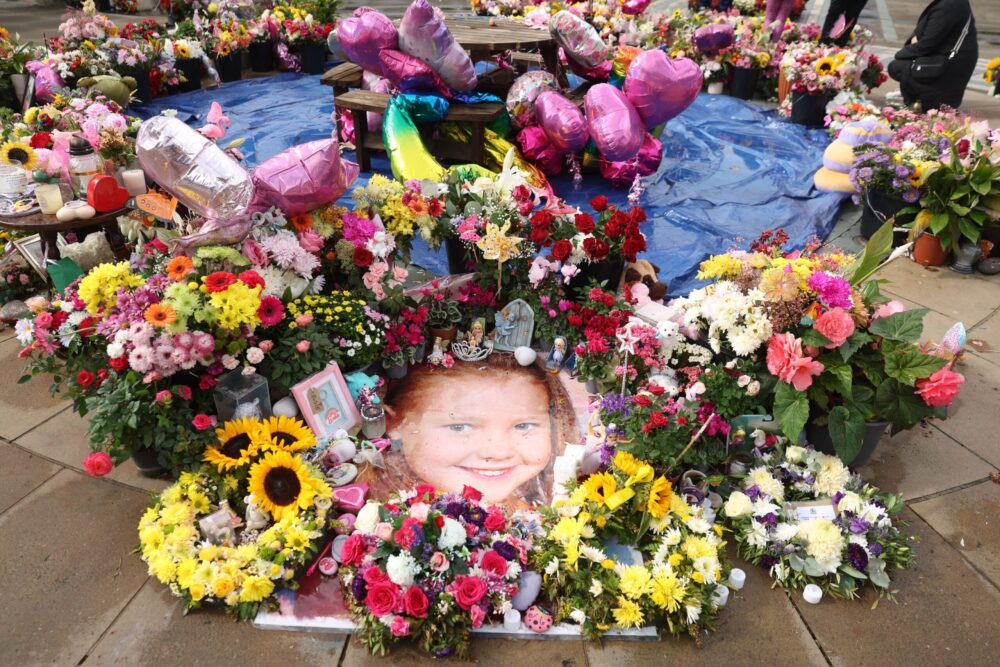
Mr Walker said:
“I have no faith in Prevent as an organisation.”
He supported the chairman’s recommendations to consider a single agency or structure to be appointed to monitor interventions for children presenting a high risk of serious harm.
He also called for the second phase of the inquiry to look at adopting a legal process of parental responsibility, after the chairman said the killer’s parents could have stopped their son if they had “done what they morally ought to have done”.
He said:
“They should go to prison. They have blood on their hands. I’ve said that publicly, but I also acknowledge that the legal framework as it currently stands makes that very difficult, and so phase two of the report has to adopt a legal process of parental responsibility.
“There is a moral obligation to protect society at large from a murderer whose intent is to cause mass murder. There has to be a legal obligation.”
Phase two of the Southport inquiry will consider arrangements for identifying and managing risk posed by individuals fixated with extreme violence and is expected to report in spring next year.





 Subscribe
 Follow Us
 Follow Us
 Follow Us
 Follow Us
 Follow Us